
 Best Sellers
 Office Chairs under $299
 Ergonomic Chairs
 Executive Chairs
 Eames Replica Chairs
 Specialist Chairs & Stools
 Meeting Room & Visitor Chairs
 Gaming Chairs
 Bar Stools
 Cafe & Lunch Room Seating
 Reception Seating
 Soft Seating
 Booth Seating
 Ottomans/Modular Seating
 Training & Conference Chairs
 Best Sellers
 Standing Desks
 Office Desks
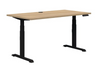 Straight Desks
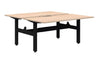 Shared Desks
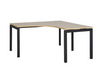 Corner Desks
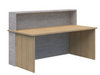 Reception Desks
 Credenzas
 Mobile Drawers
 Tambours
 Cupboards & Bookshelves
 Filing Cabinets & Lockers
 Boardroom & Meeting Room Tables
 Bar Leaners
 Café & Lunch Room Tables
 Flip Tables
 Coffee Tables
 Desk Partitions
 Partitions
 Monitor Arms
 Mats & Footrests
 Technology
 White Boards
 Glassboards
 Flip Charts & Easels
 Outdoor Seating
 Outdoor Leaners
 Sun Loungers
 Acoustic Desk Accessories
 Ceiling & Wall Acoustics
 Freestanding Acoustics
 Acoustic Pods

Corner Desk NZ - Home Office & Small Workspace Guide
You've got a spare corner, a growing pile of work, and a desk that either doesn't fit the space or doesn't fit the way you actually work. Sound familiar? For many New Zealanders setting up a home office or kitting out a small commercial space, a corner desk in NZ solves both problems at once by giving you more surface area and smarter use of the room without the desk dominating the space.
But it's not a one-size-fits-all answer. This guide covers when a corner desk earns its place, how it compares with other layouts, and what to look for before you buy.
What Is a Corner Desk?
A corner desk is also called an L-shaped desk or corner workstation. This desk is designed to sit flush into the corner of a room, with two work surfaces meeting at roughly 90 degrees.
One side is typically longer and serves as your main workspace, while the shorter return panel gives you extra desk surface area within easy reach. That’s the key difference from a standard straight desk. You’re not just getting more surface; it wraps around you instead of running in a flat line.
Corner Desk vs Straight Desk: A Quick Comparison
| Corner Desk | Straight Desk | |
|---|---|---|
| Best for | Multi-task workers, small rooms, home offices | Minimalist setups, shared offices, flexible layouts |
| Surface area | High, split across two sides | High, continuous and uninterrupted |
| Room layout | Needs two clear adjoining walls | Flexible—fits almost anywhere |
| Cost | Typically higher | More affordable entry-level options |
| Multiple monitors | Excellent for angled dual/triple setups | Works well with monitor arms |
| Flexibility | Fixed placement works best | Easy to move and reconfigure |
A corner desk suits you if you work from a dedicated room, multitask across screens or tasks, or are fitting out a small commercial office. A straight desk suits you if you move regularly, work minimally, or need furniture that's easy to reposition. A height-adjustable desk suits anyone spending 6+ hours daily at the desk who wants the option to stand.
For a broader look at all configurations, browse Hurdleys' office desks NZ collection.
When a Corner Desk in NZ Makes the Most Sense
Not every room or work style suits a corner desk. Here’s where it’s genuinely the right call.

You’re working in a small home office or spare room
A corner tucked against two walls uses space that would otherwise sit empty. Instead of a desk jutting out into the middle of the room, you've got a compact corner desk for a home office that keeps the rest of the floor clear.
For a 3m x 3m spare bedroom that doubles as a home office, this matters a lot.
You run multiple monitors or need to separate tasks
The L-shape naturally creates two zones—your main screen and keyboard on one side, reference materials, a second monitor, or your notebook on the other.
Freelancers, designers, accountants, and anyone juggling multiple things at once tend to find this layout genuinely useful rather than just aesthetically nice.
You want a focused, semi-enclosed feel
Tucking into a corner gives you a natural sense of being settled into your workspace. It's a small psychological thing, but it makes a real difference if you're working from home with distractions around you.
You’re fitting out a growing small business
In a compact commercial office, corner desk ideas like placing workstations diagonally in corners free up central walkway space and let you fit more people comfortably without the room feeling chaotic.
When a Corner Desk Isn’t the Best Fit
Corner desk layouts don't suit every room. If your space has windows, doors, or power points in the corners, fitting a corner workstation cleanly can be frustrating. You may end up blocking natural light or struggling with cable runs.
They're also not ideal if you move your furniture around often. Once a corner desk is in, it tends to stay put. Straight desks are far easier to reposition as your needs change.
If your work is minimal and all you need is a laptop, notebook, and a coffee, a small desk in NZ is a better option for you.
Best Uses for a Corner Desk in a Home Office
-
Single monitor: The extra return surface earns its keep quickly for reference materials, a printer, or simply keeping your home office setup visually uncluttered, which is useful for anyone handling physical paperwork alongside screen work.
-
Dual monitor: This is where a corner desk for home office use really comes into its own. One screen on the main panel and one on the return, angled toward you at 90 degrees, is more ergonomic than two screens side by side. It keeps both displays within a natural arc of vision rather than forcing constant lateral neck movement.
-
Work-from-home zone: The wraparound layout creates a defined workspace you step into and step out of. This creates a small but real psychological boundary that matters when your office shares space with the rest of your home.
New Zealand home office desks NZ setups vary widely. For rooms of 3m x 3m or larger, a 1400–1600mm desk fits well. For tighter spaces, compact corner workstations around 1200mm deliver the L-shape benefit without overwhelming the room.
Corner Desk Styles Available in NZ
Corner desks span a wide range of styles, price points, and functionality levels. Here's what's available in the New Zealand market.
Simple workstation desks
These are the entry to mid-range options: clean-lined, functional, and built around a melamine desktop on a steel frame. They come in standard finishes, like white, black, charcoal, and timber-look laminates, and are designed to do the job without extras. Prices typically start from around $400 and run to $900 for quality workstation-grade options.
They suit home office buyers on a practical budget, students, and small businesses fitting out multiple workstations. Don't confuse simple with poor quality, as a well-built workstation desk at $700 from a reputable NZ supplier will outlast a cheap option at half the price.
Executive corner desks
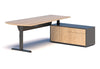
Executive-style corner desks are larger, heavier, and built to a higher finish standard. They typically feature thicker desktop panels (30mm+), more substantial frames, and design details like modesty panels, integrated credenza returns, or premium laminate finishes. They're designed for private offices, senior workspaces, or anyone who spends most of their working day at a desk and wants the setup to reflect that.
Expect to pay $1,200 to $2,500 for a quality executive corner desk in NZ. The investment makes sense when the desk is the centrepiece of a permanent workspace you're likely to use for 10+ years.
Standing and height-adjustable corner desks
A standing corner desk with an electric height-adjustable frame is increasingly the most popular option in both home and commercial fit-outs. At the press of a button, you shift from sitting to standing and back again. Most quality electric frames remember two to four height presets, so there's no fumbling with settings mid-day.
In New Zealand, electric height-adjustable corner desks typically start from around $1,200 for entry-level options and reach $2,500 or more for commercial-grade frames with larger desktop configurations. The frame quality matters as much as the desktop. Look for desks with a motor on each leg, as corner configurations should have three motors to handle the weight distribution of an L-shaped top evenly. Be cautious of corner desks with fewer motors, as these can struggle under the uneven load.
If a full electric frame isn't in the budget, a fixed-height corner desk paired with a monitor arm and an ergonomic chair gets you a significant portion of the ergonomic benefit at a lower cost.
Choosing the Right Size and Layout
Desk size, depth, and return orientation
A standard corner desk typically runs 1400mm to 1600mm on the main side, with a return of 900mm to 1200mm. That fits most standard rooms comfortably. Larger executive-style corner workstations can stretch to 1800mm, which starts to feel imposing in a small home office.
Most NZ corner desks come in left-hand or right-hand return configurations. Your dominant hand, where your main monitor sits, and which wall has your power points, should all factor into which way you orient the desk.
Measuring the room and thinking about chair space
Before you buy, measure the two walls where the desk will sit and subtract at least 100mm from each measurement for skirting boards and clearance. Then confirm you have at least 900mm of clear space behind the desk for your chair to roll out freely. That clearance is easy to overlook on paper, but you'll notice it immediately once the desk is in.
Also consider how you move around the room. A corner desk blocking a door swing or cutting off the natural path through the space creates daily friction that adds up quickly.
Storage and cable management
The junction point of the L-shape, where the two surfaces meet, is often the least useful for active work but ideal for storage. Many corner desks include a raised shelf or hutch at this point, which works well for a printer, speakers, or reference files you don't need constant access to.
Cable management is worth factoring in too. Look for desks with built-in grommets or cable channels. With two sides of the desk potentially running screens, a laptop dock, speakers, and charging cables, things can get untidy fast without some built-in organisation.
What to Look for When Buying Office Furniture in NZ
When you're shopping for office furniture in NZ, here's what to check beyond the price tag.
- Desktop thickness and material: A 25mm melamine board is the industry standard for commercial office desks, offering the right balance of durability and practicality for daily use. Be cautious of thinner options like 12mm, as these can flex, feel cheap quickly, and show wear at the edges within a year or two. Thicker boards above 25mm are available and offer a slightly more substantial feel, but don't provide a significant practical advantage over the standard 25mm. Regardless of thickness, look for PVC edging as this is the commercial standard and offers the best resistance to chipping and moisture.
- Frame quality and leg placement: Steel frames are standard on commercial-grade desks. Most commercial desks have a leg at each corner to bear the weight, which gives them their stability and durability. Be cautious of cheaper desks that try to reduce material costs by removing corner legs or relying on the desktop panel itself for rigidity, as these will loosen and fail over time.
- Warranty: Commercial-grade desks in New Zealand typically come with a 5-year warranty or more, which is a reasonable benchmark to hold any supplier to. Be cautious of cheaper options offering only 1–2 year warranties, as this is often a signal of lower build quality. A strong warranty isn't just a safety net; it's a reasonable indicator that the manufacturer is confident in their product. The savings on a lower-priced desk rarely outweigh the cost of replacing it prematurely.
- Assembly: Most NZ corner desks arrive flat-packed and require assembly, which typically takes 45 minutes to 2 hours, depending on the complexity of the frame. Check whether the instructions are clear and all required hardware is included. If you'd rather not deal with assembly, or if the desk is going into a commercial space where time matters, check whether your supplier offers delivery and installation as part of the purchase or as an add-on. At Hurdleys, we can arrange installation for commercial orders so the desk arrives ready to use.
When to Choose a Corner Desk for a Business Workspace
Corner desks aren't just a home office product. In commercial settings, they're often the smarter choice.

Small teams and compact commercial offices
In a small office of four to ten people, fitting everyone in comfortably without the space feeling cramped is a genuine challenge. Corner workstations positioned around the perimeter of the room, with each person occupying a corner or a wall-return setup, will create defined individual workspaces while keeping the centre of the room free for movement, a shared table, or a small meeting area.
It's a layout we help a lot of growing New Zealand businesses get right at Hurdleys. Done well, it makes a small commercial office feel organised and intentional rather than squeezed.
Reception-adjacent or private office areas
A corner desk works particularly well in private offices or manager workspaces where the occupant needs room for both screen-based work and face-to-face conversation. The main part of the workstation handles the computer setup; the return can hold reference materials, a second screen, or provide a surface for documents during a meeting. This creates a natural separation between the working side of the desk and the meeting side, without needing a separate table.
For reception areas, a corner configuration can define the zone clearly while giving the receptionist enough surface to manage multiple tasks without the desk feeling overwhelming in the space.
When a corner workstation supports better workflow
In roles where switching between tasks is constant, like a practice manager moving between records and phone calls, a coordinator managing briefs and schedules, or a small business owner handling operations and client work, the physical separation of the L-shape supports the mental separation of tasks.
Having a defined screen side and a paperwork side reduces the cognitive friction of constantly reorganising the same surface. It's a small ergonomic win, but adds up across a full working week.
FAQs About Corner Desk NZ Options
What is the benefit of a corner desk?
A corner desk turns unused corner space into a productive workspace while giving you more working surface than a straight desk of comparable floor footprint. The L-shape creates natural zones for different tasks, and the wraparound layout is more ergonomic for multi-screen setups than a linear desk.
Is a corner desk good for a small room?
Yes, when two adjoining walls are clear of windows, doors, and power points. In that situation, it's one of the most space-efficient layouts available. If your corners are interrupted by architectural features, a compact straight desk may actually free up more usable floor space.
How do I choose the right corner desk size in NZ?
Measure both walls and subtract 100mm for clearance on each side. For rooms of 3m x 3m or larger, a 1400mm main surface with a 1000 return works well. For tighter spaces, look at 1200mm compact options. Always confirm left vs right-hand return before ordering.
Is a corner desk better than a straight office desk NZ option?
It depends on your room and work style. A corner desk wins if you have a usable corner and multitask across screens or tasks. A straight desk wins if you need flexibility or work minimally. Neither is universally better.
If you're unsure, our team at Hurdleys is happy to help you work it out.
Can a corner desk be one of the best home office desk choices in NZ?
For a lot of New Zealand home office setups, yes. A corner desk solves the two problems most home office buyers are actually trying to fix: not enough working surface, and not enough room to fit a decent-sized desk without it taking over the space.
The L-shape addresses both at once, which is something a straight desk at a similar price point simply can't do as efficiently.